

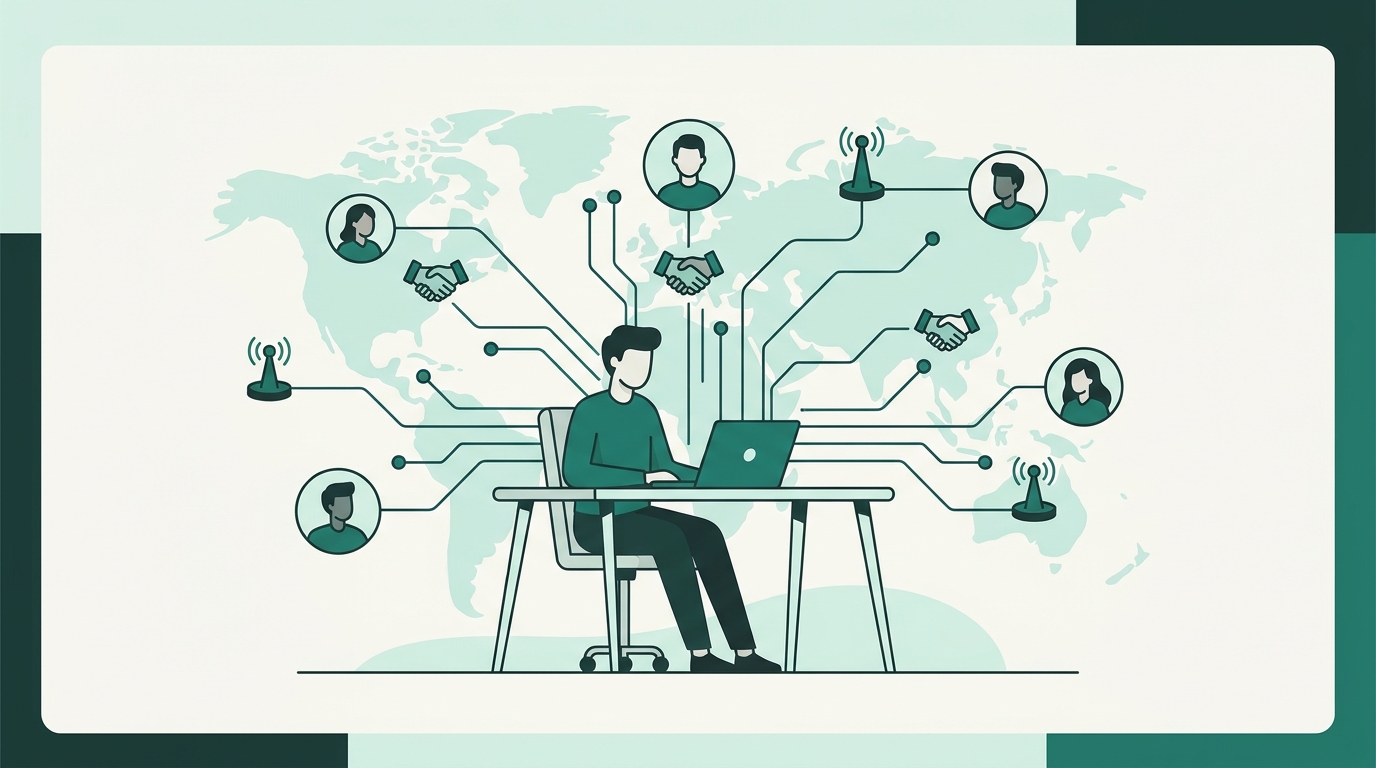
The traditional handshake over lukewarm coffee and the casual serendipity of watercooler chats have officially entered the history books. As remote and asynchronous work shifts from temporary adaptation to global baseline, professional relationship-building has undergone a permanent architectural change. For creators, developers, digital marketers, and founders, isolation is no longer a logistical barrier—it is an operational hazard.
Building authentic, high-leverage connections across time zones requires moving past shallow LinkedIn cold messages and transactional outreach. Thriving in an asynchronous ecosystem demands intentionality, public contribution, and digital authority. Here is a definitive playbook for cultivating powerful professional networks in a remote-first landscape.
In physical workplaces, proximity served as a surrogate for relationship depth. You met peers simply by sharing an elevator or attending the same local meetup. In a decentralized environment, proximity is replaced by visibility and proof of work. Professionals no longer evaluate potential collaborators based on shared geography; they assess consistency, shared domain expertise, and clear digital value.
To build meaningful connections remotely, your primary posture must evolve from extraction to contribution. Transactional inquiries like "Can I pick your brain?" create immediate friction. Conversely, professionals who openly document workflows, synthesize complex concepts, and build open resources organically attract high-value relationships.
Before launching outreach or joining niche communities, audit your public touchpoints. When a peer, potential investor, or collaborator encounters your name, your online presence functions as your decentralized resume and reputational portfolio.
Active networking involves one-to-one outreach; passive networking creates an inbound magnetic pull. "Building in public" bridges this divide by turning daily problem-solving into a community touchpoint.
Whether debugging a tricky distributed systems bottleneck, refining a conversion optimization framework, or designing an interactive user interface, sharing lessons learned establishes intellectual affinity. You invite discussions with fellow practitioners facing identical hurdles.
In global networks spanning diverse time zones, synchronous meetings represent significant calendar overhead. Respecting a peer's cognitive focus by defaulting to high-fidelity asynchronous channels accelerates mutual trust.
When establishing initial dialogue with admired industry leaders or prospective collaborators:
Broad, public feeds often suffer from high noise and low conversion. Sustainable professional connections develop within vetted, high-intent micro-communities, such as dedicated Discord servers, invite-only Slack workspaces, GitHub discussions, and focused mastermind cohorts.
When entering a specialized community, resist the temptation to broadcast promotional announcements. Instead, spend the first few weeks establishing a reputation for generosity:
Over time, active peer support establishes you as an indispensable community pillar, making subsequent collaborative or business discussions natural and frictionless.
Once you cultivate an initial circle of peers, transition from passive participant to community catalyst. Hosting recurring, low-pressure touchpoints positions you at the center of professional discourse.
Consider organizing monthly 45-minute virtual roundtables focused on single, tightly defined topics—such as headless commerce architectures, local SEO trends, or engineering manager transition pain points. Keeping attendance capped at six to eight participants encourages candid dialogue and provides all attendees with reciprocal value.
Alternatively, open bi-weekly 20-minute open office hours for junior practitioners or complementary specialists. Sharing domain insights through a digital platform built on Dev Dominion reinforces your authoritative presence while giving back to the broader creative ecosystem.
Meeting interesting peers is straightforward; preserving relationships across years of remote work requires intentional systems. Without physical cues, professional contacts quickly fade into distant memories.
Adopt a simple Personal Relationship Management (PRM) system:
Remote-first networking is not an exercise in collecting automated connections or executing aggressive cold email cadences. It is a long-term discipline of delivering asymmetric value, refining personal visibility, and fostering authentic peer relationships across decentralized channels. By publishing thoughtful insights, respecting asynchronous workflows, and building an accessible digital home, you create an enduring global network that elevates your career regardless of geographic boundaries.




Leave a Comment